For senior leaders, the debate about working from home has become strangely noisy for what is, at its core, a simple management issue.
The real question is not whether people are visible. It is whether they are delivering. It is whether they are producing strong work, supporting the team around them and contributing to business outcomes in a way that is sustainable. That’s the conversation we believe leaders should be having.
Input matters. Output matters more. And the best leaders know that performance is shaped by the environment around the person, not just the person’s physical location. Productivity isn’t a place. It is a result.
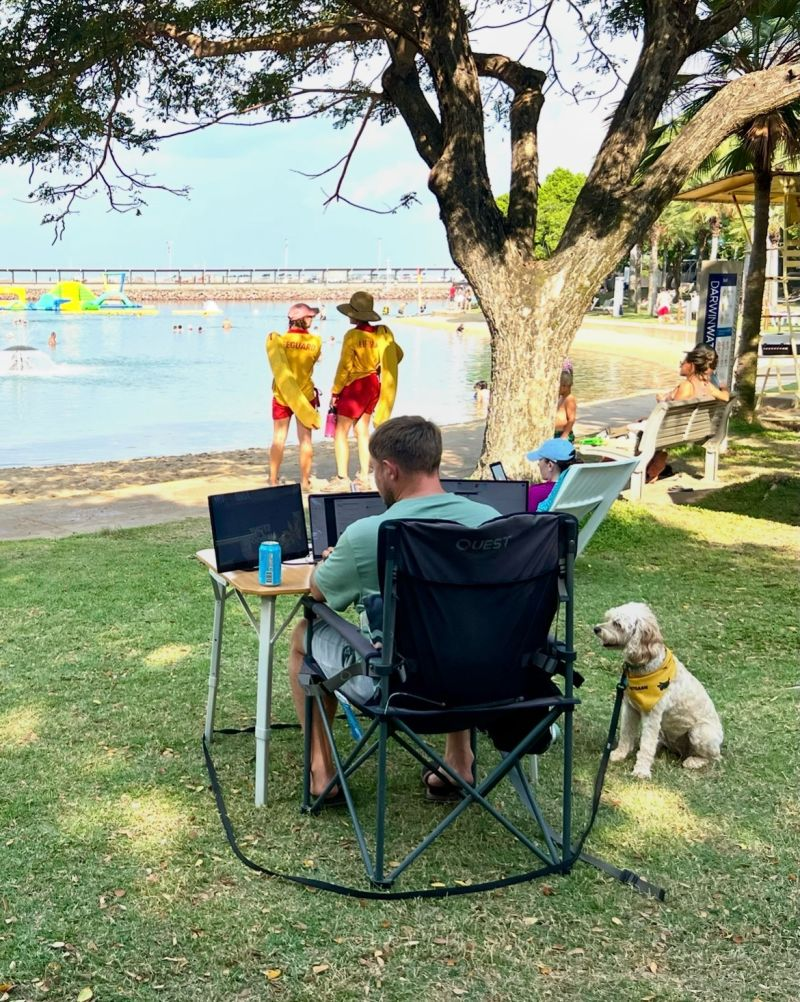
Here’s the post from Partner, Dan Czura, that triggered this conversation.
The old rules do not fit the new reality
The office was built for a different era of work: more standardised, more centralised and more suited to supervision by presence. That model can still work well in some contexts. But it is no longer the only model and for many roles it is not the best one.
Working from home has exposed something leaders have always known but not always acted on: people do their best work under different conditions.
Some need quiet. Some need structure. Some need a commute to mentally shift into work mode. Others need to avoid that commute altogether because the time, cost and stress of getting to an office drains the energy they need to perform.
That is especially true for team members balancing school runs, care responsibilities, long travel times, regional locations, rising housing costs and the simple reality of life outside work. If leaders want productivity, engagement and retention, they have to design for the whole human being, not an idealised version of one.
The strongest workplaces do not pretend everyone is the same. They create the conditions for different people to succeed in different ways.
What the data is already telling us
The data is telling us a story adaptation. Reminding an entire workforce that remote work is working.
- 69% of remote workers said their work-life balance had improved over the past 12 months and nearly 80% reported high job satisfaction.
- 37% of remote employees say their employer monitors their online activity, rising to nearly half for hybrid workers. The important takeaway is that the debate is also about trust, measurement and control, not just location.
- 39% of Australian employers now require five days in the office and the average required attendance has risen to 3.64 days a week. The point here is that the office push is getting stronger, even as flexibility remains part of how many teams actually work.
- 76% of Australians say they would not apply for a job without flexible work options. That matters because flexibility is no longer a nice-to-have; it has become a real talent and hiring factor.
- 84% of employers say other companies’ return-to-office mandates influence their own. The takeaway is that a lot of office policy is being shaped by copycat pressure, not just business need.
However, the policy debate is shifting, with recent Victorian proposals and AHRI commentary showing the conversation is moving away from “should people work from home at all?” and toward “what is reasonable, what is sustainable and what is the business case?”
That matters because it changes the leadership task.
Leaders are no longer choosing between office and home as a lifestyle preference. They are choosing the operating model that best supports output, accountability, culture and retention. If your model creates stress, it will eventually create churn.
High performance needs individual environments
There is a temptation in leadership to simplify complexity by standardising everything. One policy. One rhythm. One expectation. One definition of commitment.
High-performing teams are not built by making everyone work the same way. They are built by setting clear outcomes, establishing shared standards and allowing people enough room to do their best work inside those boundaries.
That is what we mean by individual environments for success.
A strong environment is not a perk. It is the practical combination of clarity, trust, tools, habits and accountability that lets a person perform.
That may look like:
- A focused home workspace for deep work
- An office day for collaboration, coaching or client meetings
- A hybrid rhythm that matches the role rather than the preference of the loudest voice in the room
- A tailored arrangement for someone whose productivity is strongest outside the traditional nine-to-five pattern
The point is not to make work softer. It is to make it smarter. Leaders who understand this do not lower the bar. They raise it. They stop measuring seriousness by visibility and start measuring it by contribution. Great leadership does not ask where people are. It asks what they are producing.
The leadership cost of performative presence
Too many organisations still treat office attendance as shorthand for commitment.
When leaders reward visibility over value, they create predictable problems: presenteeism, resentment, uneven access to flexibility and a quiet but corrosive sense that the rules are not applied fairly. People with longer commutes, caring responsibilities or regional home lives often end up carrying the cost of a model that was never designed with them in mind. It’s a commercial drain, as well as a cultural one.
Businesses that ignore flexibility risk losing strong people to employers who offer it with more maturity. They also risk slowing down performance by forcing teams into rigid routines that do not improve output.
There is a better question to ask: What would happen if leaders judged work by the quality, speed and consistency of the outcome, rather than the optics of the process?
In many organisations, the answer would be sharper accountability, better focus, stronger retention and less unnecessary friction – all worthy business outcomes.
What leaders should be doing now
The most effective leaders are not waiting for the debate to settle. They are defining what good looks like and managing to that standard, which looks like conversations being moved to “Here is how we work, why it works and what we expect from each other.”
If you want productivity without unnecessary stress, focus on five things:
- Define output clearly: Spell out what success looks like in measurable terms. If the work is important, it should be describable.
- Set team rhythms: Agree when people are expected to collaborate, when they can focus and how decisions get made.
- Equip managers properly: Give leaders the skills to manage performance, trust and accountability without relying on physical presence.
- Design for different lives: Build flexibility with intent, not as an afterthought. Good design supports productivity and retention at the same time.
- Review the model regularly: What works for one team, stage or season may not work forever. The best operating models evolve.
This is where leadership development becomes a commercial lever, not a nice-to-have.
When leaders know how to set expectations, hold standards and build trust across different working patterns, they create teams that perform more consistently. That shows up in engagement, retention, customer experience and revenue.
The strongest teams are often the teams with the clearest standards.
Working from home needs a mature conversation
Working from home is neither a universal cure nor a universal problem. It is a leadership decision that should be made in the context of role requirements, team interdependence, customer needs and business goals.
The most effective organisations will not be the ones that cling to old symbols of control. They will be the ones that build stronger leadership capability, clearer expectations and better designed environments for performance.
That is what attracts top talent. That is what keeps them. And that is what turns flexibility from a political talking point into a practical advantage.
Our view is simple: successful leaders support successful high-performance teams. And that matters far more than where or how someone happens to be working on a given day.
If your organisation is ready to build stronger leadership capability, align your managers around output and create the conditions for people to perform at their best, chat to our team about leadership development.